




Lock knives are one of the most searched and most misunderstood products we sell. The law around them is confusing, the terminology trips people up, and most of the information online is either outdated or flat out wrong. This guide covers the questions we get asked most often, with straight answers.
Are Lock Knives Illegal in the UK?
It is not illegal to buy, own, or keep a lock knife in the UK. What is illegal is carrying one in a public place without a good reason. This is the part that catches people out.
Under UK law (Criminal Justice Act 1988, Section 139), it is an offence to carry a knife with a blade longer than 3 inches (7.62cm) in a public place without lawful authority or good reason. Lock knives are specifically excluded from the "everyday carry" exemption that applies to non-locking folding knives under 3 inches. This means that even a small lock knife with a 2-inch blade cannot be carried in public without a valid reason.
What counts as a good reason? Using it for work (a tradesperson, farmer, or outdoor professional), taking it to or from a specific activity where you need it (camping, fishing, bushcraft), or transporting it in packaging as part of a purchase. "I carry it for general use" or "self defence" are not valid reasons.
You must be 18 or over to buy a lock knife in the UK. Selling a knife to anyone under 18 is a criminal offence.
What Is a Lock Knife?
A lock knife is a folding knife with a mechanism that locks the blade in the open position. When you open the blade, it clicks into place and stays fixed until you manually release the lock. This prevents the blade from accidentally closing on your fingers during use. The locking mechanism is what legally distinguishes a lock knife from a standard folding knife. A non-locking folding knife with a blade under 3 inches can be carried in public without a reason. A lock knife, regardless of blade length, cannot. That single mechanical difference changes the legal status entirely.
What Is the Difference Between a Lock Knife and a Folding Knife?
The difference is the locking mechanism:
- Folding knife (non-locking): The blade folds in and out freely. There is no mechanism to hold it in the open position. If the blade is under 3 inches, this type of knife can be legally carried in public in the UK without needing a reason.
- Lock knife: The blade locks into position when opened. You have to press a release (usually a liner lock, frame lock, or back lock) to fold it closed. This makes it safer during use because the blade cannot collapse unexpectedly. However, because it locks, UK law treats it differently. You need a good reason to carry one in public, regardless of blade length.
In practical terms, lock knives are safer to use for most tasks because the blade is secured. The legal trade-off is that you cannot carry one casually.
What Size Knife Can I Legally Carry in the UK?
You can carry a non-locking folding knife with a cutting edge of 3 inches (7.62cm) or less in a public place without needing a reason. This is the only type of knife that has a general carry exemption under UK law.
Any knife that locks, any fixed blade knife, and any folding knife with a blade over 3 inches requires a good reason to carry in public. There is a common misconception that a lock knife under 3 inches is fine to carry. It is not. The locking mechanism overrides the blade length exemption.
When Is It Legal to Carry a Lock Knife?
You can carry a lock knife in public if you have a specific, lawful reason. Examples include:
- Taking it to or from a camping, fishing, or bushcraft trip where you will use it as a tool.
- Using it as part of your job (groundskeeper, electrician, tradesperson, farmer).
- Transporting it directly from a shop or delivery to your home.
The reason must be specific and genuine. "I might need it" does not count. If you are heading to the woods for a weekend of bushcraft, carrying your lock knife in your rucksack is perfectly reasonable. Carrying the same knife in your pocket on a trip to the supermarket is not.
What Types of Lock Knife Are There?
Lock knives come in several designs, defined by how the locking mechanism works:
- Liner lock: A thin metal liner inside the handle springs across to hold the blade open. You push it sideways to release. This is the most common type and what you will find on most of our lock knives.
- Frame lock: Similar to a liner lock, but the handle frame itself acts as the lock. Typically found on heavier-duty knives.
- Back lock: A spring-loaded bar on the back of the handle locks into a notch on the blade. You press down on the bar to release. Often found on traditional and hunting-style designs.
All three types are legally treated the same way in the UK. The mechanism does not affect the legal status.
How Much Does a Lock Knife Cost?
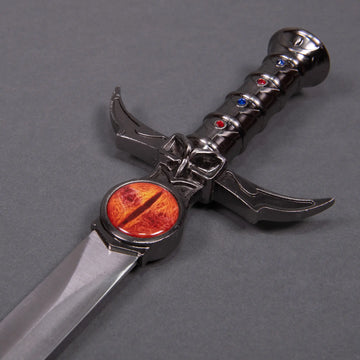
Our lock knives range from £7.99 to £24.99. At the lower end you get a solid stainless steel blade with a basic handle. At the higher end you get features like pakkawood handles, LED lights, belt clips, and decorative detailing. These are all collectible and display-grade knives. You can browse the full range of lock knives on our site.
How Do I Close a Lock Knife Safely?
Hold the handle firmly with one hand, keeping your fingers clear of the blade path. With your other hand (or thumb, depending on the design), press or push the lock release. On a liner lock, push the metal liner sideways away from the blade. On a back lock, press down on the release bar at the back of the handle. Once the lock disengages, fold the blade slowly into the handle. Never force a lock knife closed. If the mechanism feels stiff, check for dirt or debris in the pivot area.
How Do I Look After a Lock Knife?
Basic maintenance keeps a lock knife working smoothly:
- Cleaning: Wipe the blade after each use. If dirt gets into the pivot or lock mechanism, use a cotton bud or compressed air to clear it out.
- Oiling: A drop of light oil on the pivot point keeps the action smooth. Do not over-oil as it attracts dust.
- Storage: Keep it dry. If the knife gets wet, dry it thoroughly before storing. Stainless steel resists rust better than carbon steel, but no blade is immune to neglect.
- Sharpening: A small whetstone or ceramic sharpening rod is all you need. Maintain the existing bevel angle and use light, consistent strokes. A sharp knife is safer than a dull one because it requires less force and is less likely to slip.
What Handle Materials Are Available?
Our lock knives come in a range of handle materials:
- Pakkawood: A composite made from layers of hardwood veneer bonded with resin under high pressure. It looks and feels like natural wood but is stronger, more water-resistant, and less prone to cracking. Available in multiple colours across our range.
- Aluminium: Lightweight and durable. Often anodised for colour and corrosion resistance. Common on tactical-style designs.
- Stainless steel: Heavy and robust. Gives the knife a solid, premium feel.
- Wood: Natural wood handles offer a traditional look and comfortable grip. Requires slightly more care to keep in good condition.
Do You Sell Other Types of Knives and Blades?
Yes. Alongside lock knives, we stock machetes and bushcraft blades, fixed blade knives, daggers, and a wide range of decorative and collectible knives. If you are looking for something Japanese, we also carry a full range of samurai swords, katanas, and tanto blades.
Looking for a lock knife? Browse our full lock knife collection or visit us in store at Scarborough. All orders ship via Parcelforce 48 with delivery in 3 to 7 working days.